15.5.2026, 13:45
CVU BATANA
Exhibition of the Rovinj Photodays 2025 Grand Prix winner
Mitar Simikić: The Black Gold
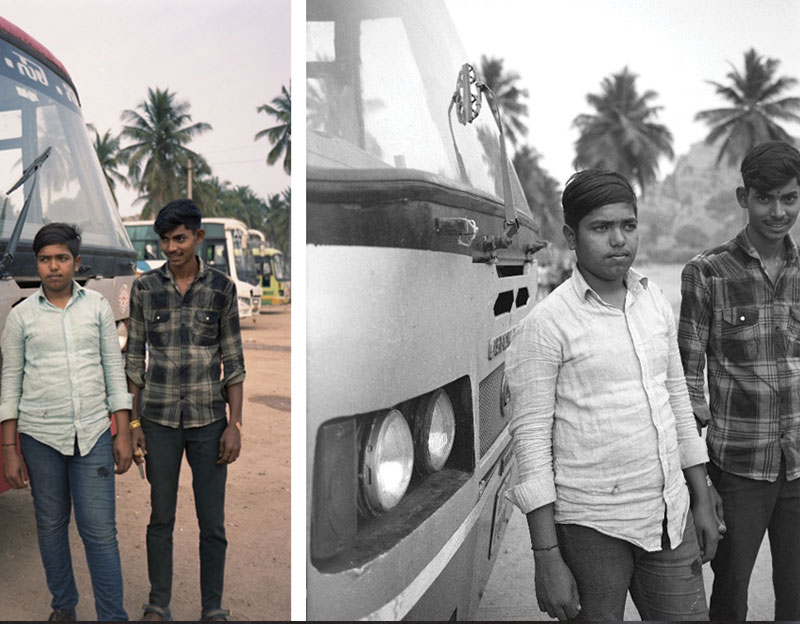
Ugljevik, a town formed by a coal mine in the northeast of Bosnia and Herzegovina, it was created as a socialist vision of a place of equal homes, work and life. Through photographic fragments similar to the pages of a family album, the exhibition talks about the loss of home, displacement and people’s fragile memories who are trying to find a foothold on the ever-changing ground.
The Black Gold
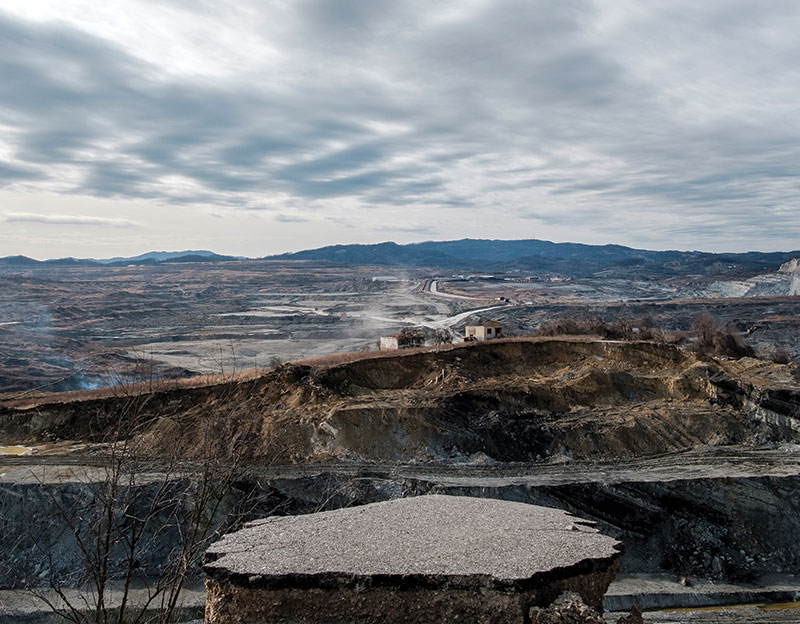
Located in the northeastern part of Bosnia and Herzegovina, the town of Ugljevik (with its name derived from “ugalj”, the Bosnian word for coal), clearly denotes a place built next to a mine. Ugljevik was envisaged in the times of socialism as a model of industrial community founded on the principles of equality and progress, but instead, it became marked by disappearance. This work is rooted in personal history. In 1982, my parents were among the first families who were forced to leave their homes owing to the coal mine expansion.
Several years later, in 1987, my maternal grandparents, Macedonian bakers who came to this region in the late 1960s and spent their entire lives here, were also displaced. Their houses, like many others, now exist only in memory, buried beneath layers of soil. This intergenerational rupture shapes my approach: the work functions both as a documentary investigation and as a personal confrontation with inherited absence. The story does not end there: decades later, the mine continues to expand, families are still being relocated, houses are being demolished, and entire settlements are disappearing. Ugljevik lives in a constant state of displacement, suspended between its industrial fate and the uncertain survival of its community. Its destiny, like the ground shifting beneath it, remains unstable: it remains an open question, a place forever on the edge of vanishing. Time and space, the two fundamental pillars of photography, intertwine here like a whirlwind, drawing us into silent witnesses of past lives. Like a family photo album telling the story of someone’s home, someone’s history, these photographic fragments break memory apart and, like engraved letters on gravestones, remind us of the relentless flow of time.
And yet, this landscape, like a hungry beast, devours everything in its path. Before us unfolds a struggle between man and nature, between history and the present, between presence and oblivion. Ugljevik functions as a microcosm of a broader post-socialist industrial reality, where promises of collective prosperity have given way to environmental degradation, corruption and instability. The operating company faces potential bankruptcy, further intensifying the paradox: a town deconstructs the very energy source that is now itself economically uncertain. This moment gives the work additional urgency, as it may document the final phase of relocation and the disappearance of what remains of the original settlement. More than a local story, this is a narrative of generational displacement and industrial erasure, reflections on how landscapes shaped by exploitation re-model the inner landscapes of those who once called them home.